- Clearer product understanding
- Stronger sales presentation
- Campaign-ready foundation
The challenge
An aluminium profile on its own cannot communicate the architectural result or the experience of an installed product. Explaining systems in person takes time and asks the customer to imagine much of the outcome. The challenge was to make applications, differences and value easier to understand.
Our approach
Show each solution in a setting that reveals its purpose, while providing the detail needed to make a decision. Combine visual understanding with catalogue precision to support both individual customers and professional buyers.
Our contribution
- Created a website organised around collections and detailed product pages.
- Created and improved contextual images showing products in appropriate environments.
- Produced a sales video to explain and present the offer.
- Developed a detailed catalogue to support sales presentations.
- Presented Minimal Furniture within the same coherent brand environment.
- Interactive opening-system map, contextual concierge and finish comparison.
The results
MINIMAL now has a stronger image and a clearer offer. The website, video and catalogue provide a shared resource for discovery, explanation and sales. Improved sales have been reported to AOUI. Together, these assets also provide a foundation ready for forthcoming online campaigns.
Commercial outcomes reported to AOUI. No quantified metrics or independent sales audit are presented. These outcomes are not attributed exclusively to AOUI’s intervention.
The details that move the sales journey forward
01
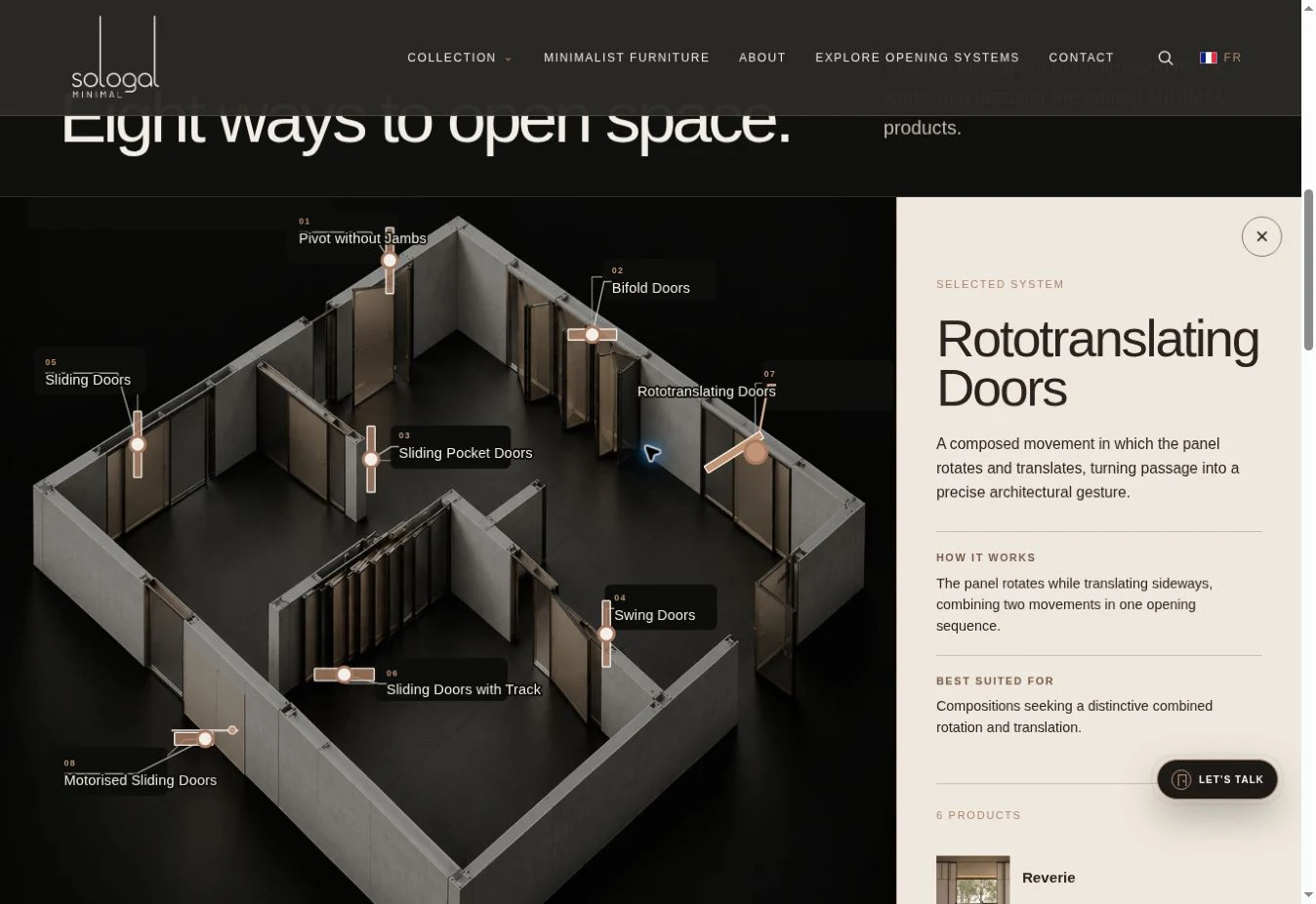
A map that explains opening systems
The interactive architectural map presents eight opening systems. Selecting a system, such as rototranslating doors, updates its explanation and compatible designs, with a route to the relevant collection.
Connect a technical movement to its use in a space and to products the customer can explore.
02
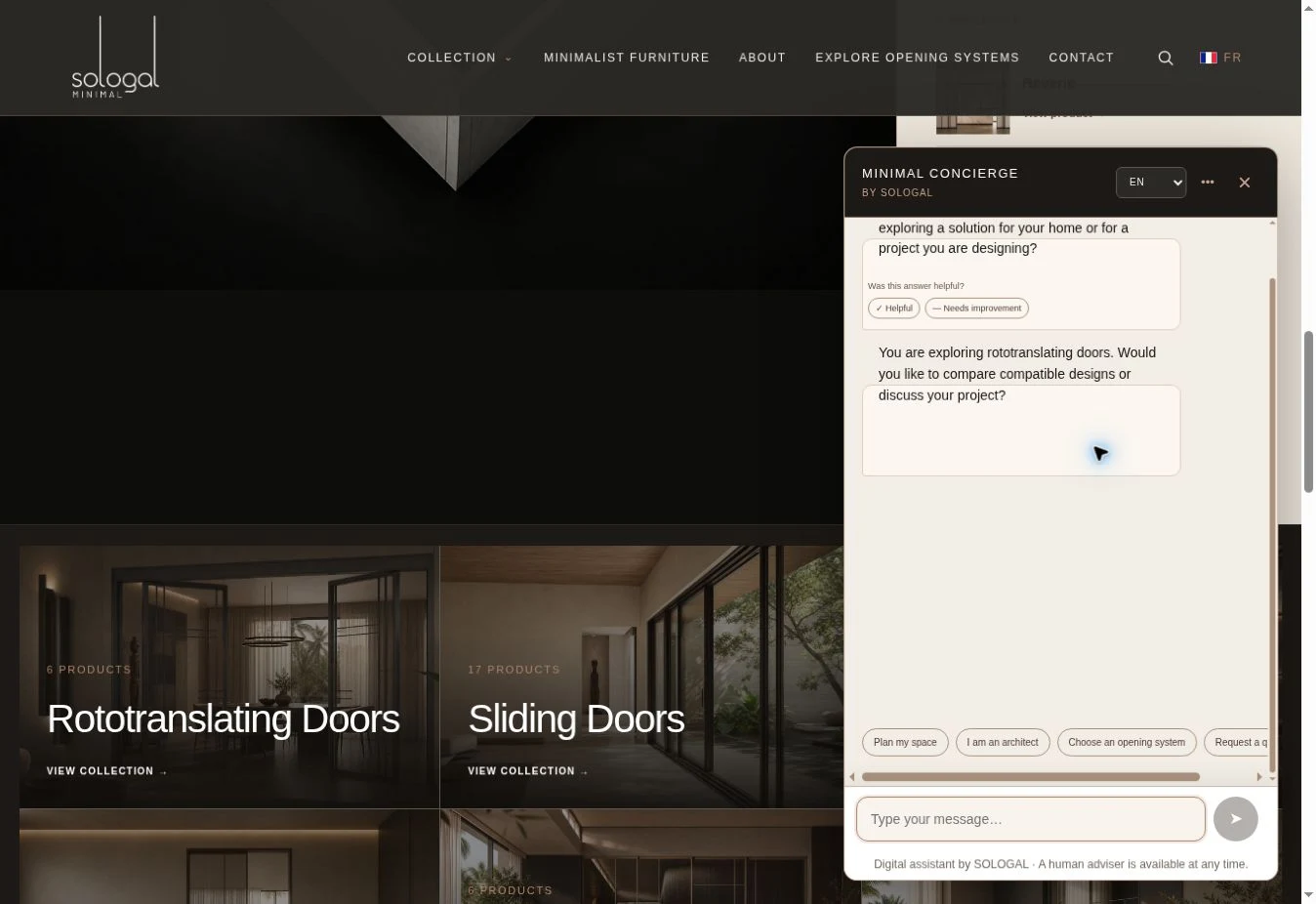
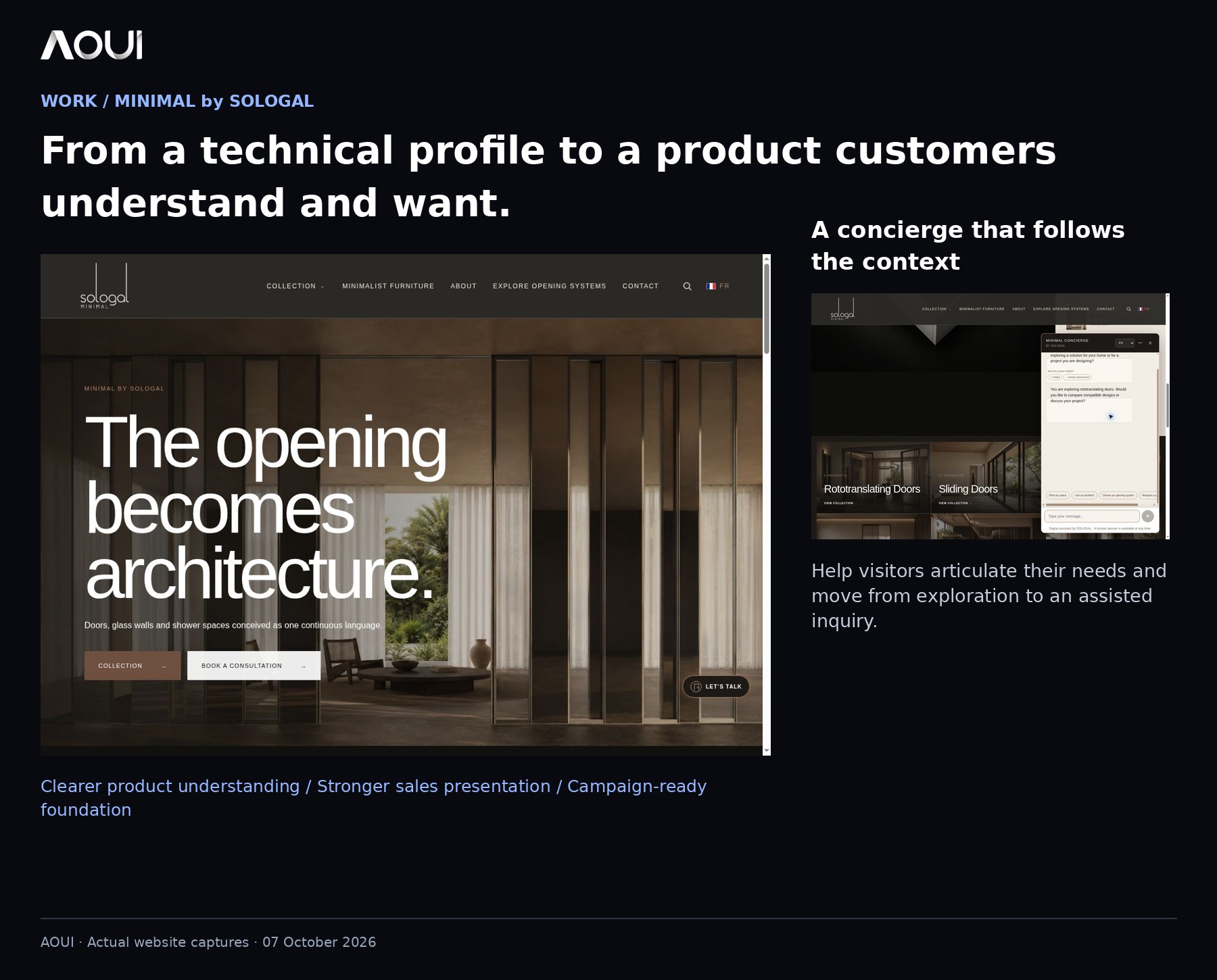
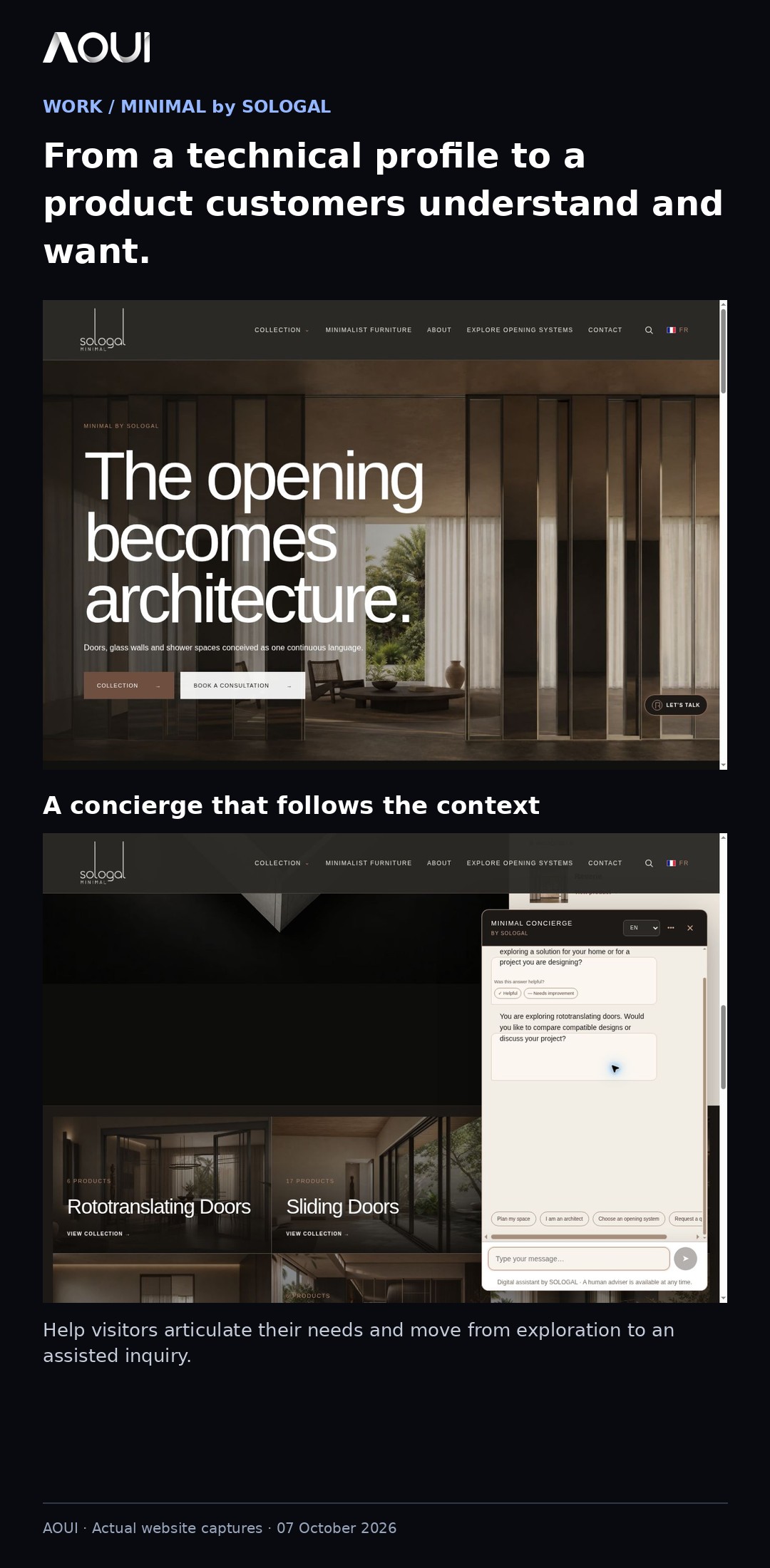
A concierge that follows the context
From the selected system, the concierge offers to compare compatible designs or discuss the project. Quick entry points cover planning a space, architects, choosing a system and requesting a quotation. A human adviser remains available.
Help visitors articulate their needs and move from exploration to an assisted inquiry.
03
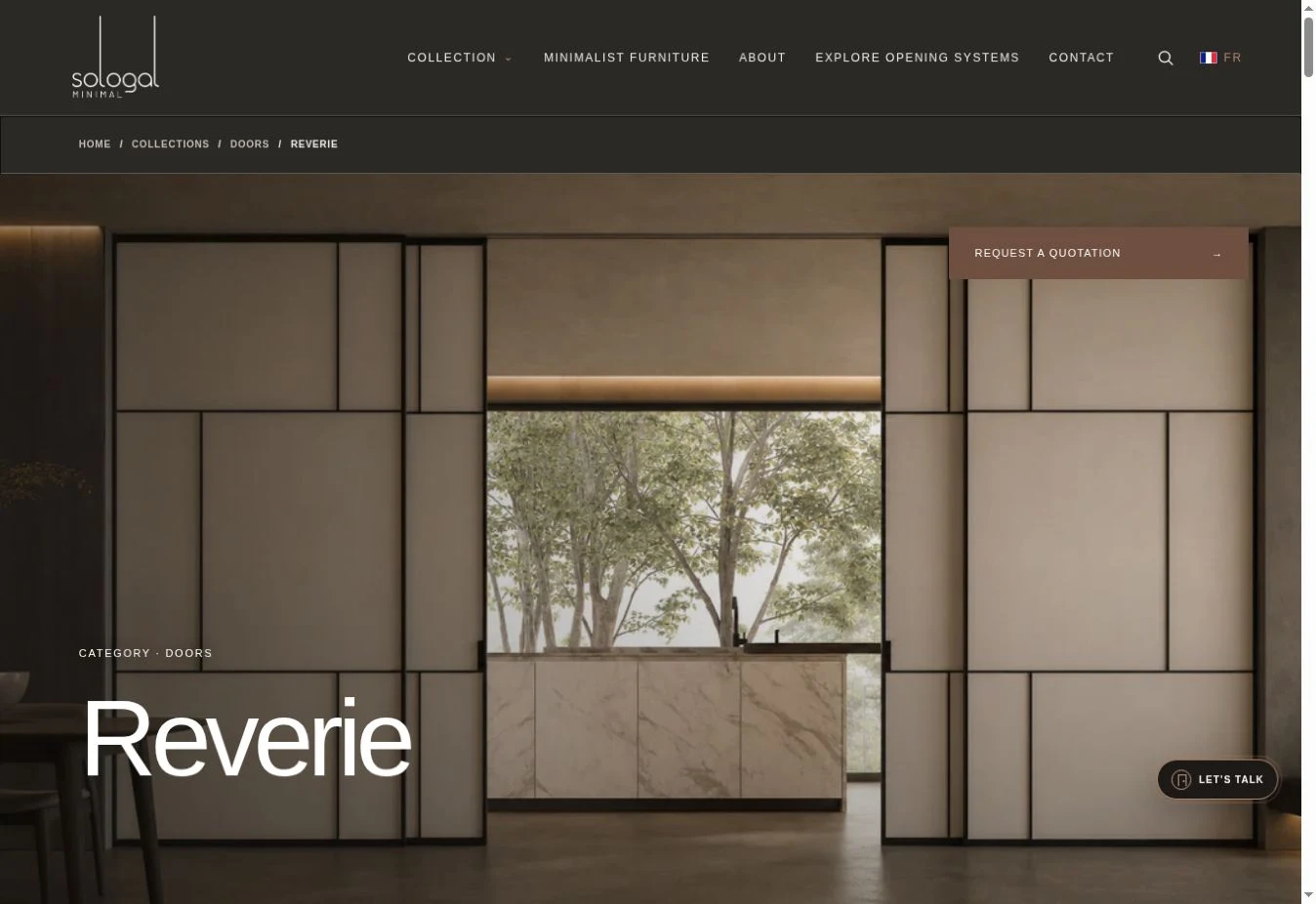
A catalogue that shows the result
Reverie is shown in an interior, then explained by movement: rototranslation, sliding, pivot and other configurations. The copy explains functional and architectural differences. Quotation requests can retain product context.
Give sales teams a shared resource to show, explain and prepare the configuration.
04
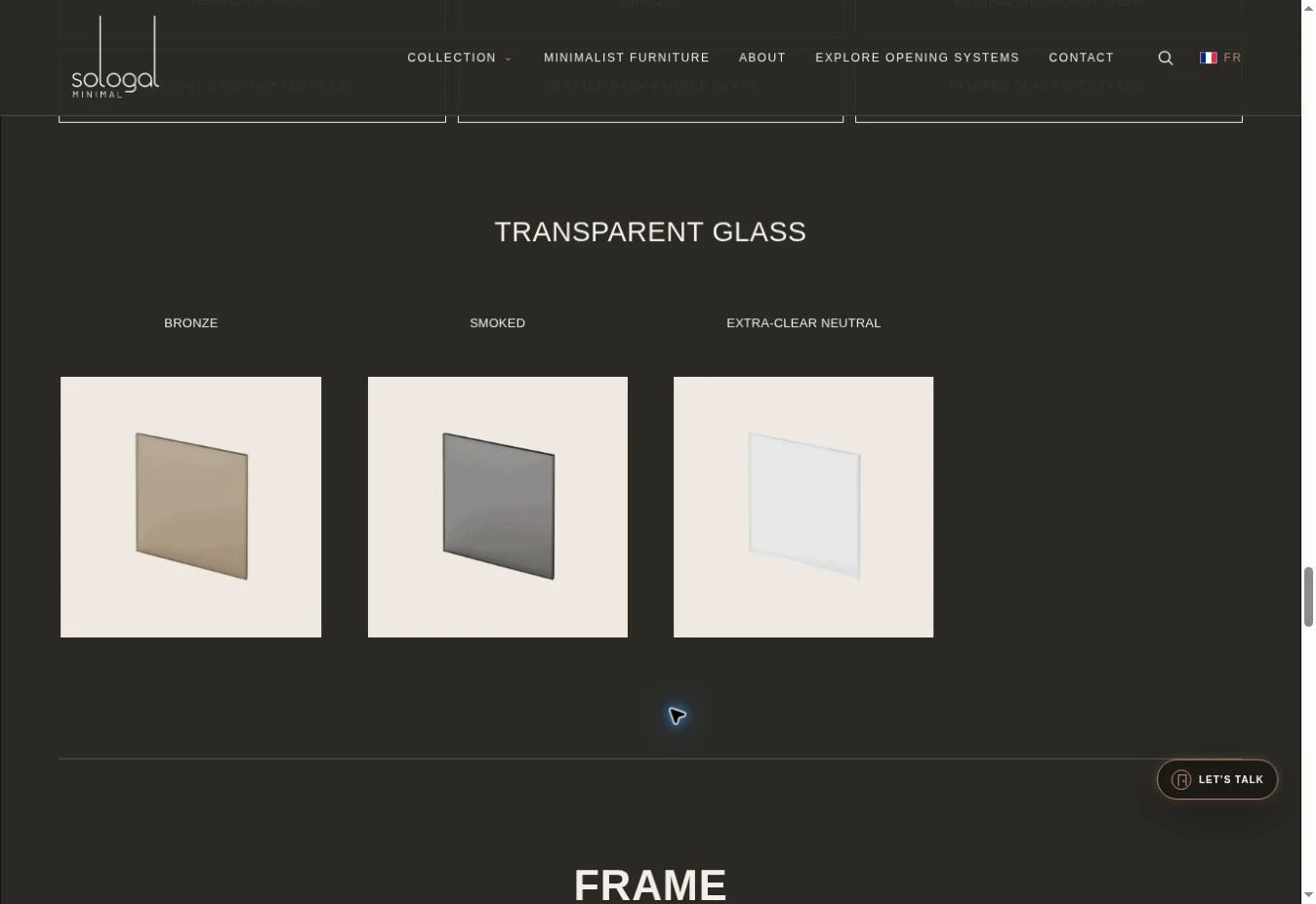
Finishes customers can compare
Product pages separate glass and frame categories. Bronze, smoked and extra-clear finishes have enlargeable previews; frames distinguish anodised and painted aluminium.
Make material and finish choices more precise before consultation.
05
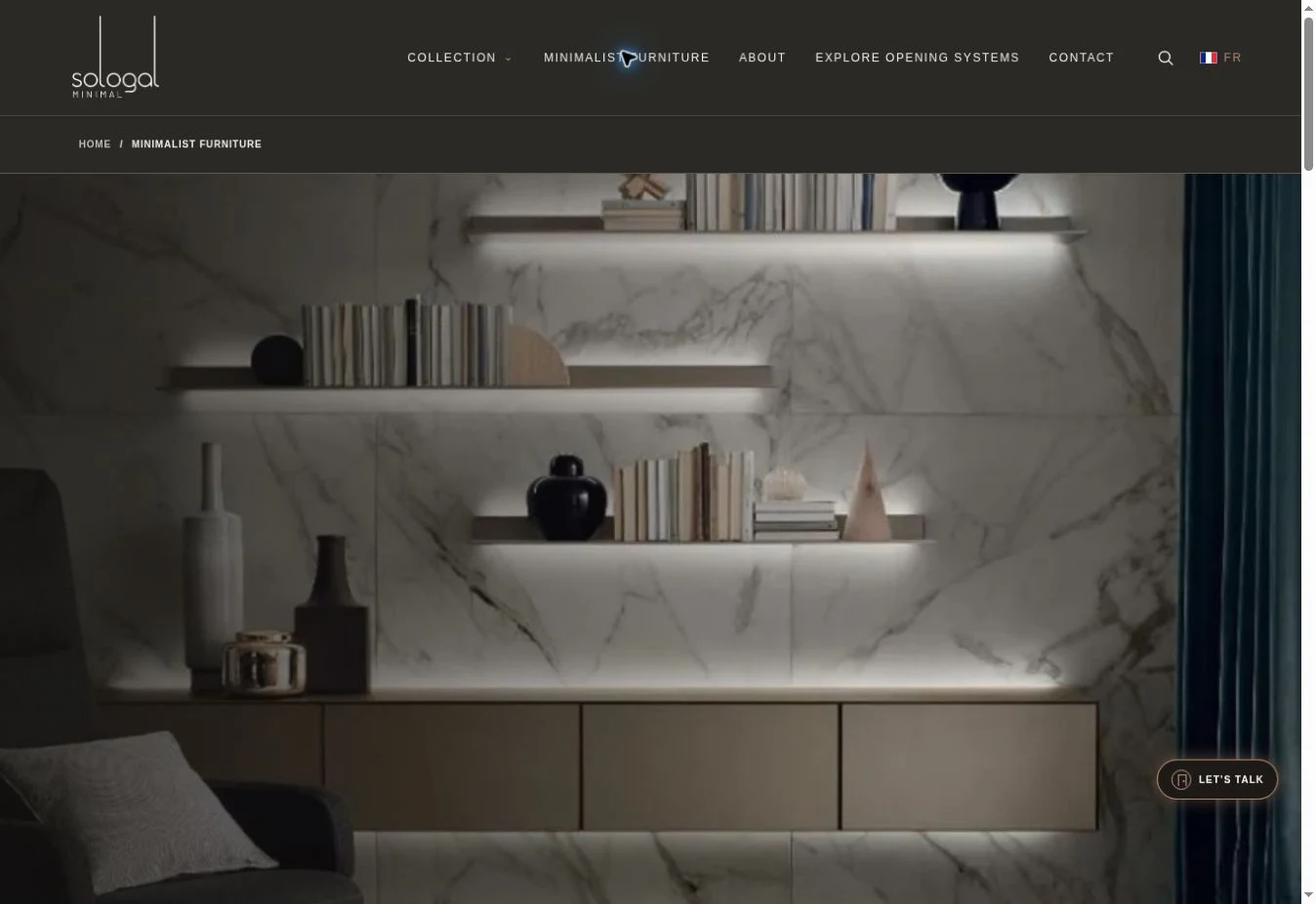
Furniture extends the architectural world
Minimalist Furniture organises the offer into families: floating shelves, bookshelves and wall systems, display cabinets, modular systems, wardrobes and islands. Contextual imagery extends the language of the door collections.
Present a coherent interior offer and introduce complementary products.
Presentation compositions
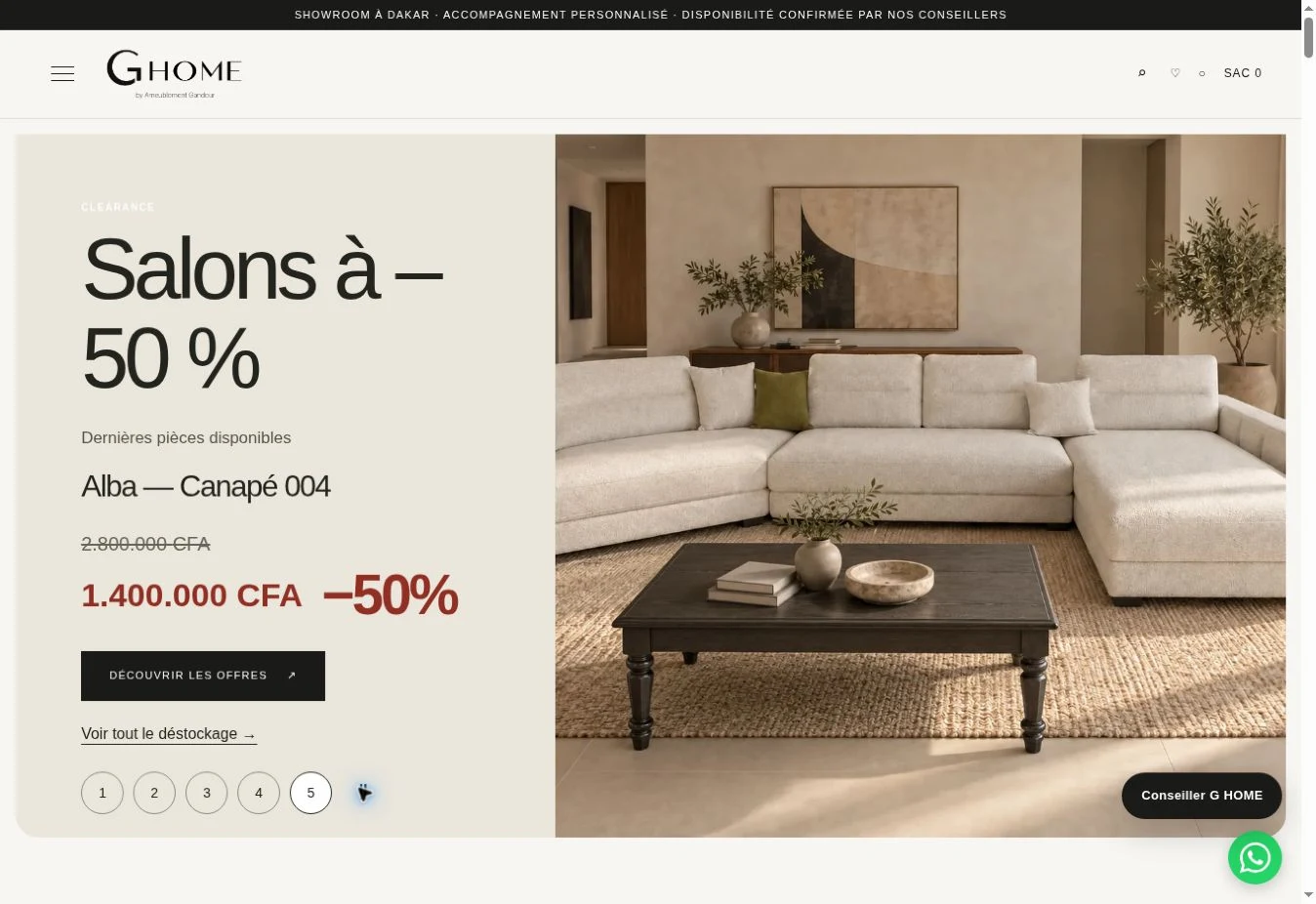
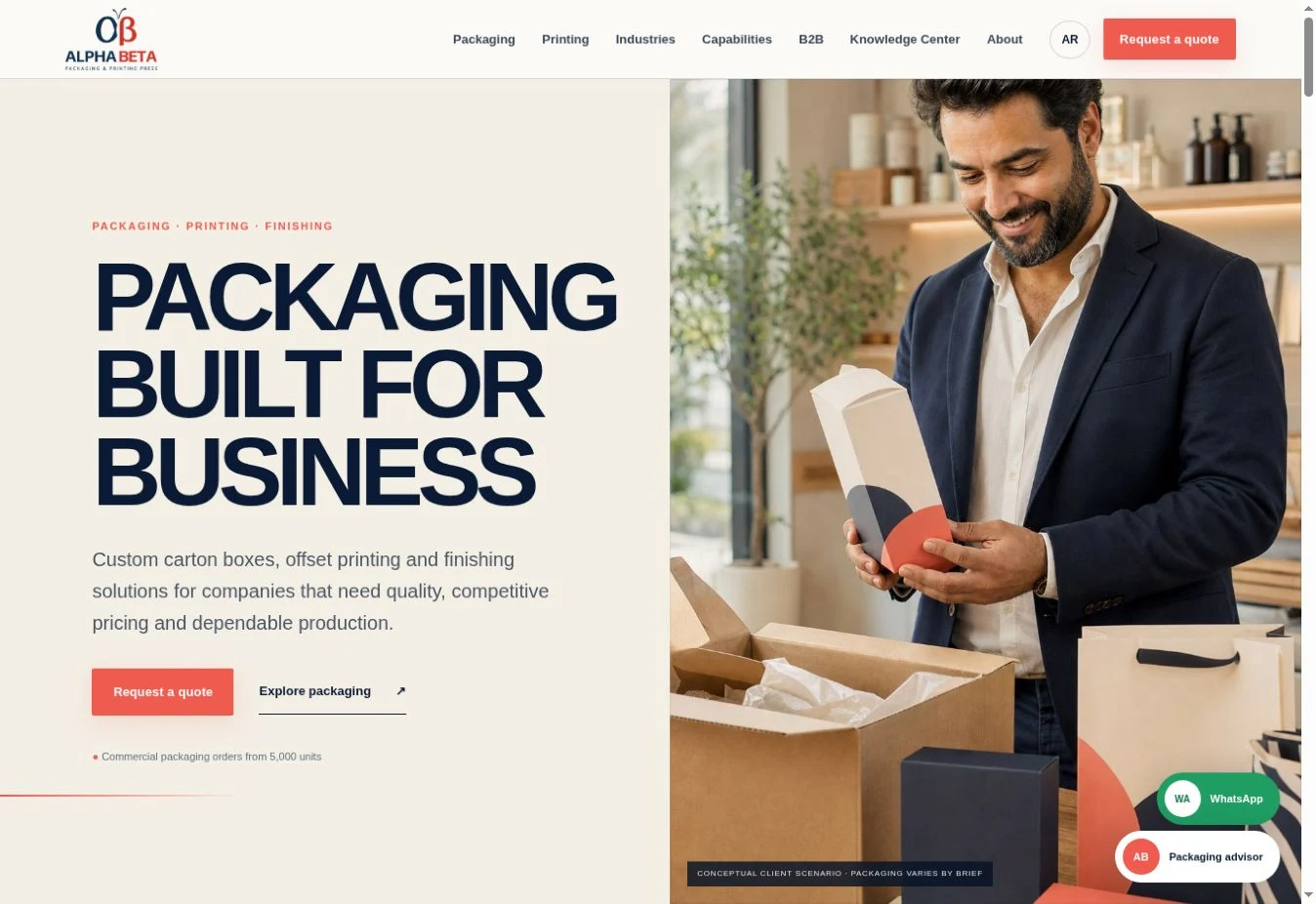
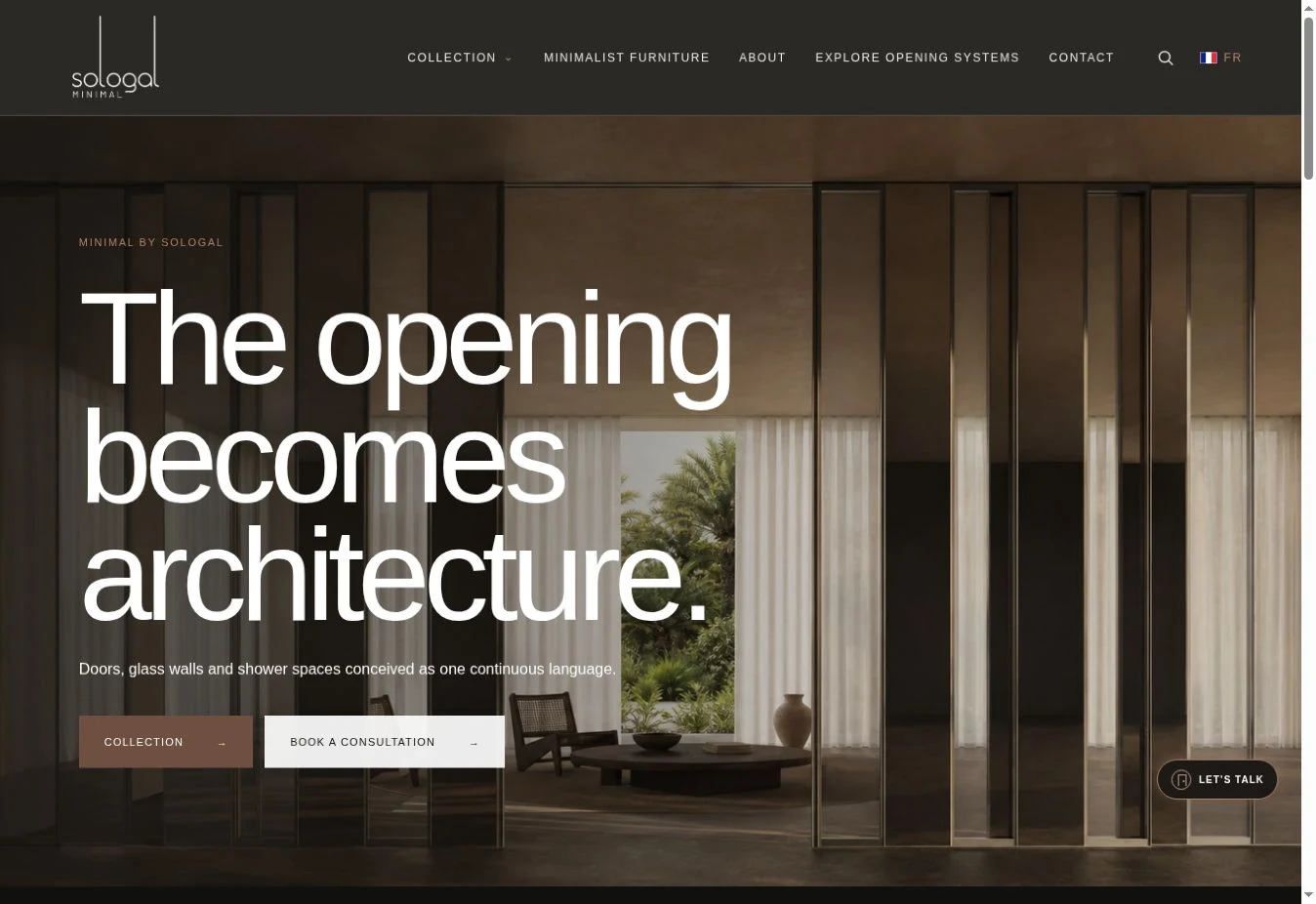
These compositions use actual desktop website captures. The portrait format is a presentation visual, not a capture of the website on a mobile device. Prices and availability reflect the capture date. Conceptual imagery retains its original site labels.
Show the result, explain the solution, support the decision.
Visit the client website ↗